
Print-On-Demand Corner
Print-on-demand is a business strategy where items (like apparel, bags, pillows, posters, stickers, etc.) are only produced after a customer places an order. There is no inventory or stocked products. Not only does it reduce storage space, it also minimizes inventory management, wasted materials and printing supplies.
How It Works
- Create an image design using an image editing program like Photoshop, Illustrator, GIMP (free), etc. Of course, you can also download any of our print-on-demand ready sports images! The image must be at least 150 dpi and in jpg or png format.
- Select a POD platform and upload your design. Different platforms specialize in different product types. See below for some recommend POD platforms.
- Complete the order process and wait for your product(s) to arrive.Â
OR, If You want to Open Your Own Print-On-Demand Store...
- Research and select a POD provider offering the types of products you want to sell (apparel, art, cell phone cases, etc.). See our list below of recommended POD providers for business start-ups.
- Join their program (most are free) and create your products.Â
- Decide how you’re going to sell (Shopify, YouTube, eBay, etc.) your products and connect your shopping platform to your POD platform. This can be done automatically via the POD provider. Some POD platforms also offer their own store.Â
- Setup your shipping methods (free shipping, flat-fee, etc.). Â
- After a customer makes a purchase at your store, it is automatically forwarded to the POD platform to be processed and shipped to your customer.Â
- You pocket the difference between your sale price and the price (product + shipping) you paid the POD partner.
PROS of a Print on Demand (POD) Business
Low startup cost & low risk — No need to buy inventory or printing equipment. You only pay when something sells. Print on Demand & Fulfillment Service, GeeksforGeeks
No inventory management or storage hassle — Because items are produced on demand. AllDayShirts.comÂ

Flexibility and scalability — You can offer many different products (tees, hoodies, mugs, home décor, etc.) and experiment with designs, products, or niches easily. Print On Demand Business, Dynamic Mockups
Fast to launch — As soon as you have a design and a platform, you can put products live. NogenTech
Good for creatives / artists / niche sellers — You get to focus on design and creativity, while production & logistics are handled by others. GeeksforGeeks, eCommerce Fastlane
Potential sustainability benefits — Because items are only made when ordered, there’s less overproduction and waste compared to traditional mass-production. Blue Rose One
Flexibility to iterate — If a design flops you can ditch it quickly; if something sells well, you can expand.

CONS of a Print-On-Demand Business
Lower profit margins — Because each item is made individually, per-unit costs are higher than bulk manufacturing; that squeezes margins. GeeksforGeeks, One World Direct
Less control over quality, shipping, packaging — Since you rely on a third-party provider, you may face inconsistency in print quality or packaging. AllDayShirts.com, NogenTech
Longer fulfillment and shipping times — Because products are made after order, customers may wait longer than with pre-stocked inventory. One World Direct
Dependence on POD provider — any supplier issues affects your business — If supplier has delays or discontinues products, you’re impacted. GeeksforGeeks, Print on Demand & Fulfillment Service
Competition and market saturation — Because barrier to entry is low, many people start POD shops; standing out requires good design, branding, and marketing. Guide Foundry, eCommerce Fastlane
Limited branding / packaging control — You often can’t customize how packages or labels look (unless provider supports that), which may hamper a “brand feel.” Print On Demand Business, eCommerce Fastlane
Potential issues with returns, shipping delays, and customer satisfaction — Because you rely on third-parties.
Informative Print-On-Demand Resources & Where to Learn More
“Print on Demand: Meaning, Working, Pros and Cons” – a great classic overview. By GeeksforGeeks
“How Print-On-Demand Works (2025)” – outlines the exact workflow: design → upload → order → fulfillment/shipping. By NogenTech

“Print-On-Demand vs Drop-Shipping: Which Fits Your Goals?” – helps you understand what POD does and does not offer. By eCommerce Fastlane
YouTube: The most up-to-date info comes from creators who test products. Look for Wholesale Ted, Michael Essek (great for design theory), and Ryan Hogue Passive Income.
Platform Academies: Printful Academy and Printify Blogs offer free, high-quality courses on SEO, marketing, and design trends.
Subreddits: r/PrintOnDemand and r/EtsySellers are active communities where people discuss current supplier quality issues (e.g., “Is Supplier X shipping late this month?”).
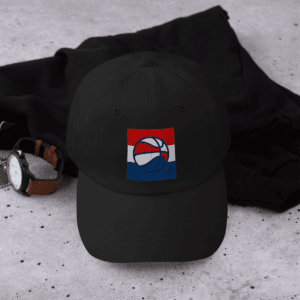
Best Print-on-Demand Websites & Platforms
It is important to distinguish between Fulfillment Services (you need your own website/storefront) and Marketplaces (they provide the traffic).
Top Fullfilment Services (best for Shopify & Etsy sellers)
- Printful/ Printify: Best for quality, consistency, margins and variety. They connect you to a massive network of print shops worldwide, allofvxwing you to choose the cheapest or closest printer to your customer. They own their own machines, meaning quality is usually higher and more consistent, though slightly more expensive. These 2 companies actually merged a few years ago.
Gelato: Excellent for global reach. They produce locally in 30+ countries, which speeds up shipping significantly.
Top Marketplaces (best for beginners with no audience)
Redbubble: You just upload art; they handle the site, marketing, and sales. Lower profit, but zero maintenance.
Amazon Merch on Demand: The holy grail of traffic. Hard to get accepted into, but offers access to Amazon’s massive customer base.
- Etsy:Â While technically a marketplace, you usually integrate it with Printify or Printful to fulfill orders.

